 By logical dot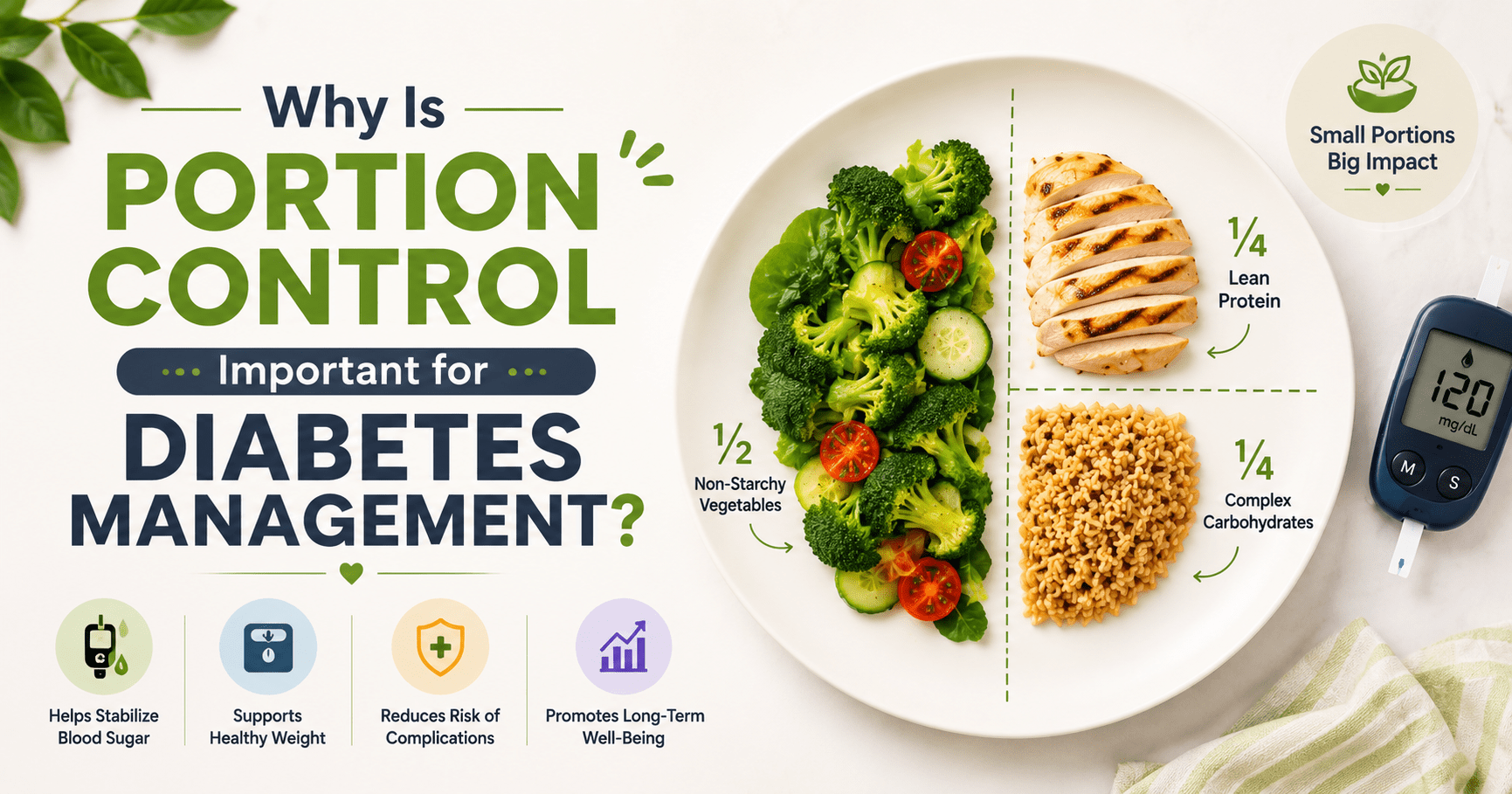
“I just have to avoid sugar” is what most people think when it comes to managing diabetes. It requires more than just that; you need to not only avoid processed sugar but also avoid foods that give sudden sugar spikes.
Over time, these increased levels of sugar may start affecting other body processes and organ functions. These high blood sugar symptoms may even worsen; thus, learning to manage them for a longer duration of time may help with better management of diabetes and improve overall health.
Portion control can help you achieve just that and avoid that guilty feeling of slipping through the cracks and falling off the routine.
What is Portion Control?
Portion control is being actually aware of how much and what goes into your body. It includes understanding the basic difference between serving size and portion control. The serving size often mentioned near the nutritional information of any food item is the amount that is considered okay for any individual to consume.
Portion size is more personalised; it is the amount you choose to consume to reach your personal health goals.
Why is Portion Control Important for Diabetes Management?
Controlling and understanding what to eat and exactly how much to eat of it can help in managing not only blood sugar levels but also weight management.
- This promotes a balanced nutritional intake.
- It helps in managing overeating
- Reduces the risk of sudden sugar spikes in the blood
- Improves the effectiveness of the treatment that is being given for diabetes
- Helps maintain a basal blood sugar level, thus, over time, helping to improve insulin sensitivity
How can you practise portion control every day?
Knowing about it and actually practising a principle are two completely different things. Here is how you can make portion a part of your daily life:
- The plate method: In this method, you fill up your plate with definite portions of lean protein, carbohydrate and vegetables.
- Measure how much you eat: Occasionally use measuring cups, food scales or spoons to see how much your serving size is and to prevent overconsumption.
- Slow and mindful eating: Slow eating helps your body in processing whether there is any more need for food or not. When you eat quickly, the body cannot process the amount of food being consumed, which leads to overeating.
- Schedule meals and snacks: Schedule a specific time for meals and snacks to reduce the quantity of food consumed and the types of food that are your food temptations when you are hungry.
Which fruit is good for Diabetes?
Diabetes management is greatly dependent on a balanced diet. No one food is a magic bullet for regulating blood sugar, but some fruits and traditional foods can fit into a general healthy diet. What really counts is to carefully pick and eat foods that have a low glycemic index and high fibre content, and make sure that you follow this through.
- Whole oranges are a good source of fibre and vitamin C, and may promote more stable blood sugar levels.
- Pears: Soluble fibre is good for digestive health and may help to increase satiety.
- Amla: It is traditionally used for management and has antioxidants and vitamin C. It is rarely used directly, though; amla churan or juice is mostly used for the management of diabetes.
- Kiwi and Papaya: Both these nutritious fruits are good in small quantities and contain a range of vitamins and minerals.
- Jamun: A traditional food item widely used in traditional dietary practices, can be incorporated seasonally into a diverse eating pattern.
Is yoga beneficial for Diabetic Patients?
While following a healthy lifestyle and keeping a check on our portions, exercise is another key element in managing diabetes. Diabetic yoga has become a popular, gentle exercise for diabetes patients as it benefits both their physical and psychological health.
- Yoga involves lighter and sometimes intense actions that allow the muscle moment and the consumption of blood sugar levels.
- Yoga helps by calming down the individual, increasing focus and being more present. This helps in better analysing how much food we eat and thus avoiding overeating.
- Practising yoga can help us better manage the high blood sugar symptoms and also manage higher oxidative stress.
Common portion control mistakes to avoid
Certain habits may make following through with portion control more challenging:
- Fasting: You should avoid fasting with an unstable blood glucose pattern, as it might later increase the craving for sweet and defeat the entire purpose.
- Assuming that healthy foods are unlimited: Foods that seem considerably healthy may contain higher levels of carbohydrates and fats.
- Not following serving sizes: Not routinely reading serving sizes on food labels and/or not measuring portions sometimes means eating more than recommended amounts.
- Distracted eating: When you eat while also being engaged in different forms of media, it creates a difference in attention span and makes it harder for your body to register what you just had.
- Avoid empty calories: Drinking juices or extra-sweetened coffees that only hold calories and no real nutritional value should be avoided.
Final thoughts
Managing diabetes is harder than it may seem. Controlling what you eat and how much of it you eat can help you manage the sugar spikes over a longer duration of time. It is a sustainable technique that can help you manage your diabetes better, keep your weight in check and also improve the overall lifestyle of the patient.
While trying to maintain blood sugar levels using the portion control method, it is also important that you consistently follow through with your therapy and medications. Platforms like Zeelab pharmacy support their patients in providing quality medicines and making healthcare affordable for all. All of this combined can help you better manage diabetes in the long run.
FAQ
Q. Can portion control help lower blood pressure?
Yes. When you portion your food, you make sure a limited amount of food gets in your system and thus also manage the release of glucose in your blood.
Q. What is the easiest way to practise portion control?
Using the diabetes plate method is the simplest approach. This makes sure that your plate has an appropriate amount of lean protein, fibre and carbs.
Q. Which fruits are good for controlling diabetes?
Fruits with a low glycemic index and high in fibre are the best options to consume when suffering from diabetes. Some of which are apples, berries, pears or amla.
Q. How long does it take to see results from portion control?
This may vary from person to person, but consistent portion control combined with your therapy and your doctor’s consistent guidance.