 By logical dot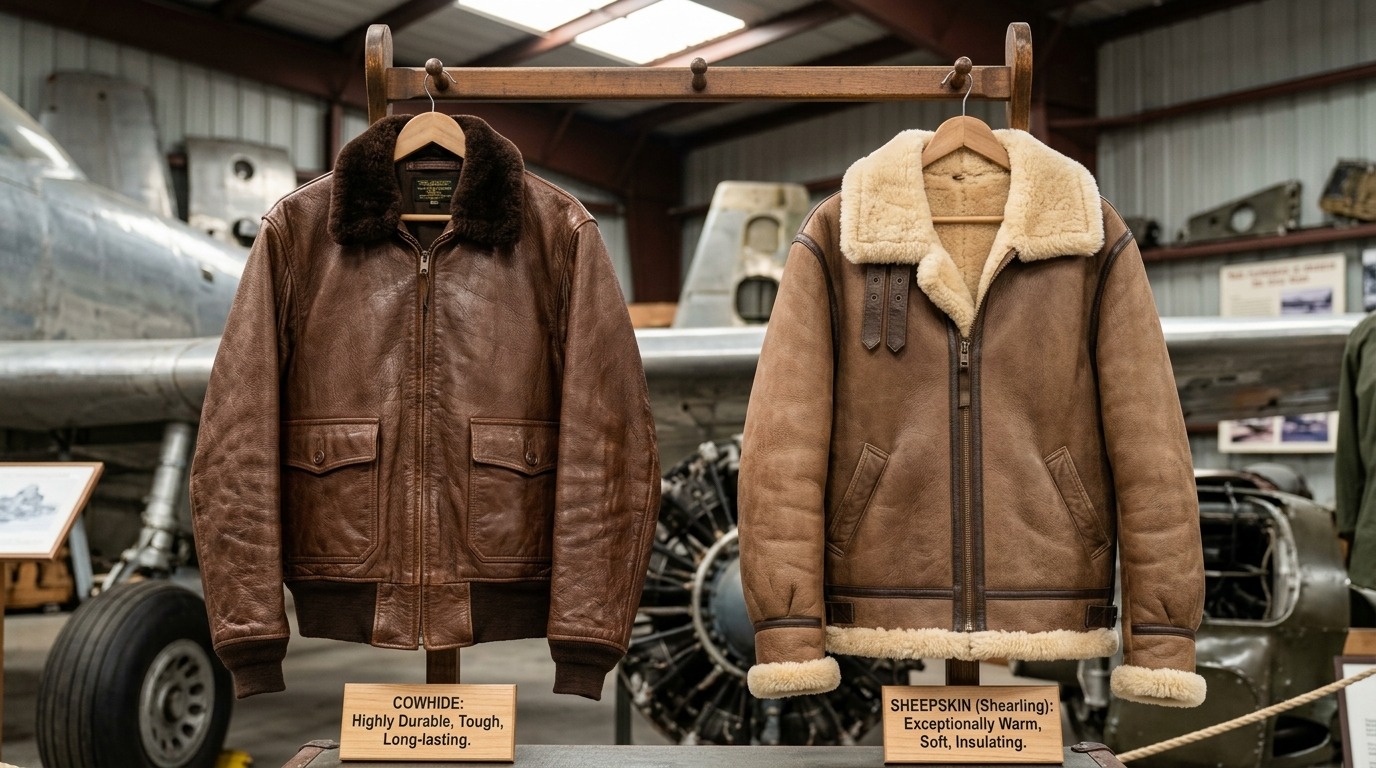
Picking a leather aviator flying jacket sounds simple until you realize the leather itself changes everything. The weight on your shoulders. How warm it keeps you. Whether it survives years of hard use or starts cracking after one winter. These are not small differences.
Two leathers dominate the aviator jacket world: cowhide and sheepskin. Both have deep roots in aviation history. Both look great from a distance. But they behave very differently in real life, and most buyers only figure that out after they have already spent their money.
This guide breaks it all down. No fluff, no filler. Just an honest, experience-based comparison of what matters most when you are buying a men’s aviator jacket built to last.
Where These Leathers Actually Come From
Cowhide is sourced from cattle hides. It is one of the most widely used leathers in outerwear globally. The hide is thick, dense, and goes through a tanning process that makes it extremely tough. Most cowhide used in quality jackets is full-grain or top-grain, meaning the outer surface of the hide is preserved, which is where the strongest fiber concentration lives.
Sheepskin is softer and lighter. It can come with the wool still attached on the inside (genuine shearling) or be processed into a smooth exterior finish. Pilots in both World Wars relied on sheepskin-lined flight jackets because nothing else kept them warm at altitude without adding excessive bulk. The B-3 bomber jacket, one of the most iconic mens shearling aviator jackets ever produced, was built entirely around sheepskin.
Both have genuine, proven track records. The question is which one fits your priorities.
Durability: Which Leather Actually Holds Up
If long-term durability is the primary thing you care about, cowhide is the stronger choice.
• Cowhide hides are significantly thicker than sheepskin, usually between 1.2mm to 1.5mm in quality jackets
• It resists abrasion far better, which matters if you wear the jacket regularly across varied environments
• Cowhide holds its shape over years of use with minimal care
• It develops a natural patina over time, which many wearers consider a feature rather than a flaw
• Sheepskin is more prone to cracking if it dries out and is not conditioned regularly
• Sheepskin is also more susceptible to water damage unless properly treated from the start
A well-maintained sheepskin aviator jacket can still last a decade or longer. The durability gap narrows significantly with consistent care on both sides. The main difference is that cowhide is more forgiving when care gets skipped.
Weight and Comfort: What You Feel the Moment You Put It On
This is where sheepskin wins convincingly.
• A sheepskin leather aviator jacket weighs noticeably less than a cowhide equivalent in the same size
• Sheepskin drapes more naturally against the body and breaks in from the first wear
• The softness is immediately noticeable; no break-in period required
• Cowhide jackets, especially new ones, feel stiff for the first several weeks of regular use
• Cowhide does loosen up over time and many wearers prefer how it feels once fully broken in
• For all-day wear or travel, sheepskin tends to be the more comfortable starting point
If you want to pull something on and feel comfortable immediately, sheepskin wins. If you do not mind a break-in period in exchange for long-term toughness, cowhide rewards that patience well.
Warmth: Which One Keeps You Warmer in Real Conditions
Sheepskin, especially genuine shearling, is not even a close competition on warmth.
• Shearling retains heat naturally because the wool fibers trap air close to the body
• A genuine mens shearling aviator jacket can keep you comfortable in temperatures well below freezing without heavy layering
• Cowhide by itself offers wind resistance but not significant insulation unless lined separately
• Most cowhide aviator jackets use synthetic or quilted fabric linings for warmth, adding weight without the same thermal efficiency
• Sheepskin regulates temperature more naturally, keeping you warm in cold and less likely to overheat in milder weather
For cold-weather performance, sheepskin is the historical and practical winner. This is exactly why military pilots chose shearling-lined jackets for high-altitude flying where temperatures dropped to extreme lows at cruising altitude.
Appearance: Which Leather Looks More Like the Real Thing
Both leathers produce excellent-looking aviator jackets, but they carry different aesthetics. A leather aviator flying jacket in cowhide tends to have a sleeker, more structured silhouette. The leather sits crisply, holds sharp lines at the collar and cuffs, and projects a slightly more modern edge.
Sheepskin and shearling jackets carry a vintage military character. The texture is softer, the silhouette has more body, and the shearling collar is a visual signature that most people immediately recognize as authentic aviator style.
• A mens black aviator jacket in cowhide reads as clean and contemporary
• A shearling version reads as classic, rugged, and vintage-inspired
• Neither is objectively better. It depends entirely on the look you are going for
• Fur-lined options, often called fur aviator jacket mens styles, tend to use sheepskin or synthetic shearling specifically for this heritage aesthetic
If you are building a wardrobe around a timeless military look, sheepskin fits more naturally. If you want something versatile across casual and smart-casual settings, cowhide gives you more flexibility.
Care and Maintenance: Which One Is Easier to Keep Looking Good
Neither leather is truly low-maintenance, but cowhide is considerably more forgiving.
• Cowhide: Wipe down with a damp cloth, condition two to three times per year, store on a wide hanger, keep away from prolonged moisture
• Sheepskin: Requires sheepskin-specific cleaner, cannot be machine washed, needs conditioning more frequently, sensitive to excessive moisture and heat
• Scratches on cowhide: Minor surface scratches can often be buffed out with a soft cloth. Knowing how to fix scratches on leather properly keeps your jacket looking sharp without causing more damage with the wrong products
• Scratches on sheepskin: More visible due to the softer fiber surface. A leather conditioner rubbed in with a soft cloth helps. Deep damage should go to a professional
• Professional cleaning: Sheepskin should be professionally cleaned at least once a year if worn regularly. Cowhide can typically go longer between professional treatments
One practical thing most buyers overlook: scratches happen on both types. Because cowhide is thicker and denser, surface scratches tend to be shallower and more manageable at home. Sheepskin is softer, so the same scratch can look more significant even if it is similarly shallow.
Price: What to Realistically Expect to Spend
• Entry-level cowhide Men Aviator Jackets start around $150 to $250 for decent quality
• Mid-range cowhide options from reputable brands typically fall between $250 to $500
• Premium full-grain cowhide jackets can exceed $600 to $800
• Sheepskin jackets without shearling lining are often priced similarly to mid-range cowhide
• Genuine shearling aviator jackets are consistently more expensive due to raw material costs
• A quality aviator shearling jacket mens style from a credible brand starts around $400 and frequently exceeds $700 to $900 for authentic shearling
• Fully shearling or mens fur aviator jacket options at the premium end can reach $1,000 or more
The price gap widens significantly once you move into genuine shearling territory. If budget is a concern, cowhide delivers more durability per dollar at mid-range price points. If warmth and heritage aesthetics are the priority, shearling is worth the investment.
Who Should Choose Cowhide and Who Should Choose Sheepskin
Go with cowhide if:
• You want maximum durability with lower maintenance requirements
• You live in a mild to cool climate rather than extreme cold
• You plan to wear the jacket across varied environments including city use
• You want a mens black flying jacket that works across multiple occasions
• You prefer a structured, sleek silhouette over a vintage-inspired profile
• Your budget sits in the mid-range and you want the most durability for it
Go with sheepskin or shearling if:
• Warmth is your primary concern and you need it to perform in real cold
• You want the authentic vintage pilot jacket look that only shearling delivers
• You live in or travel regularly to genuinely cold climates
• You are comfortable with slightly more care requirements
• You want a shearling aviator jacket mens style or fur-trimmed look that reads as classic
• You are willing to invest more upfront for a different kind of long-term value
What Leather Jacket Black Carries
If you are looking for Aviator Jackets For Men in both cowhide and sheepskin builds, Leather Jacket Black has designed its range specifically around men’s aviator styles with a focus on material quality that shows clearly in the feel and finish of each piece. Their mens aviator jacket leather lineup spans both classic and contemporary interpretations, giving buyers a real choice. Whether you are shopping for a standard cowhide aviator or a shearling option, the construction quality and material sourcing are genuinely worth looking at.
Leather Jacket Black also offers customization including embossing and debossing on select pieces. If you want to understand the difference between these two finishing techniques before personalizing a jacket, their emboss vs deboss explainer covers the distinction clearly. Most jacket brands do not bother explaining this at all, so it is a useful resource if customization is part of what you are looking for.
Quick Side-by-Side Reference
Durability: Cowhide is stronger and more abrasion-resistant. Sheepskin is durable but needs more consistent care.
Warmth: Sheepskin (especially shearling) wins clearly. Cowhide provides wind resistance but not natural insulation.
Weight: Sheepskin is lighter. Cowhide is heavier, particularly in thicker grades.
Break-in: Sheepskin is comfortable immediately. Cowhide softens significantly over weeks of wear.
Aesthetic: Cowhide is sleek and modern. Sheepskin reads as vintage and military-inspired.
Maintenance: Cowhide is more forgiving. Sheepskin requires more regular and specific care routines.
Price: Cowhide is generally more affordable at mid-range. Genuine shearling commands a clear premium.
Best suited for: Cowhide suits versatility and durability seekers. Sheepskin suits cold-weather use and heritage-look buyers.
Frequently Asked Questions
Is cowhide or sheepskin better for a leather aviator flying jacket?
It depends on what you prioritize. Cowhide is tougher and more resistant to damage over time. Sheepskin is softer, warmer, and carries a more traditional aviator aesthetic. Neither is universally better.
How long does a cowhide aviator jacket last?
With regular conditioning and proper storage, a quality cowhide mens leather aviator jacket can last 15 to 25 years or longer. Full-grain cowhide is particularly long-lived because the strongest fiber layer of the hide remains intact.
Are shearling aviator jackets actually warm enough for winter?
Yes. Genuine mens shearling aviator jackets are among the warmest outerwear options available. The natural wool fibers trap heat effectively, making shearling suitable for temperatures well below freezing without heavy layering underneath.
Can I wear a leather aviator jacket in rain?
Occasional light rain is manageable if you apply a water-resistant conditioner to the leather. Neither cowhide nor sheepskin should be soaked through. If your jacket gets wet, let it dry naturally away from heat sources and condition it once fully dry.
How do I remove scratches from a leather jacket?
For surface scratches, rub the area gently with a clean finger first. The natural oils in your skin often reduce the appearance of minor marks. A leather conditioner worked in with a soft cloth handles slightly deeper scratches well. For significant damage, a leather repair kit or professional restoration service is the better call. Knowing how to fix scratches on leather correctly prevents further damage from using the wrong products.
What makes a black aviator leather jacket different from other leather jackets?
The silhouette is the main distinction. A black aviator leather jacket typically features a shorter body length, ribbed or knit cuffs and hem, a front zip closure, and often a shearling or faux-fur collar. These design elements trace directly back to military flight jacket specifications developed in the 1930s and refined through the 1940s.
Is sheepskin leather difficult to maintain?
It requires more consistent attention than cowhide. Regular conditioning with a sheepskin-specific product, careful handling of moisture, and professional cleaning at least once a year for jackets worn regularly will keep sheepskin in good condition. Neglecting care leads to drying, cracking, and gradual loss of the leather’s natural suppleness.
What is the difference between a shearling and a fur aviator jacket?
Shearling is genuine sheepskin with the wool still attached on the inside. A mens fur aviator jacket may use shearling or a separate fur material as trim on the collar and cuffs rather than as a full lining. Shearling is generally warmer and more premium than decorative fur trim used only at the edges.
Bottom Line
If you want something built to take wear and work across many situations, cowhide is the right call. If you want warmth, natural softness, and the kind of classic military character that only genuine shearling delivers, sheepskin earns its higher price. Both leathers have a legitimate place in a well-built aviator jacket. The best one is whichever matches how you actually live and where you actually wear it.
Browse the full range of mens aviator jacket leather options at Leather Jacket Black to see both cowhide and sheepskin builds side by side.