 By logical dot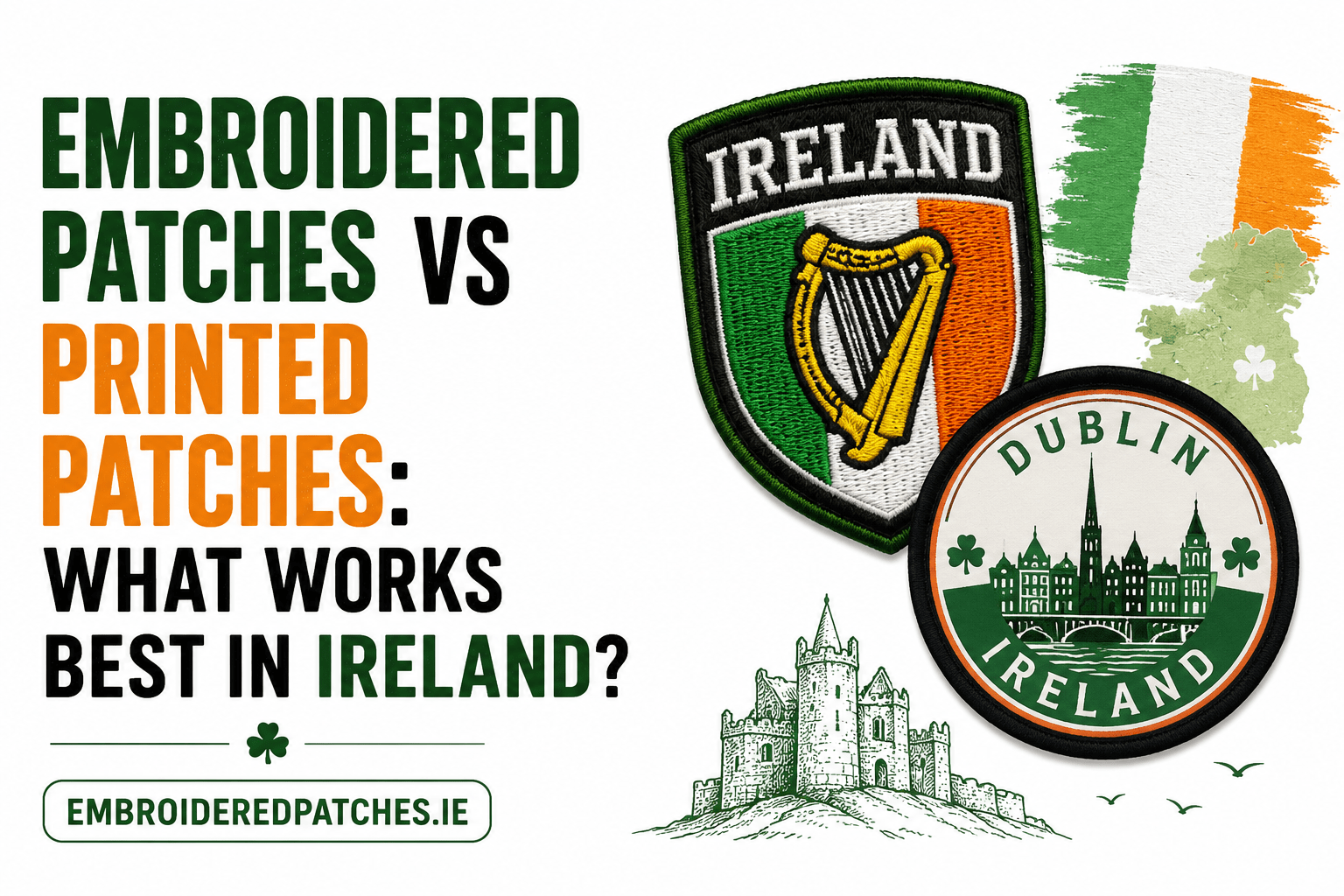
Whether you’re outfitting a Gaelic football club, branding workwear for a Cork-based trade business, or adding a personal touch to a jacket for a Dublin market stall, patches have become a go-to solution for affordable, eye-catching customisation. But when you sit down to place an order, one big question always emerges: do you go embroidered or printed? Both options have real merit, and both have clear limitations. This guide unpacks everything you need to know so you can make a confident, informed choice for your specific project in Ireland.
Understanding the basics: what are these two types of patches?
An embroidered patch is made by stitching thread — typically polyester or rayon — directly onto a woven backing fabric using industrial embroidery machines. The result is a raised, textured design with a tactile quality that people instinctively associate with quality. Printed patches, by contrast, are produced using direct-to-garment or dye-sublimation printing onto fabric or polyester material, then cut and finished with a border. They can reproduce full-colour photographic images and fine gradients that embroidery simply cannot replicate stitch-for-stitch.
In Ireland, both patch types are widely used — from GAA club kit to corporate uniforms, charity merchandise, and fashion accessories. The choice often comes down to four factors: durability, design complexity, budget, and intended use. Let’s examine each in turn.
Durability in the Irish climate
Ireland’s weather is a unique consideration that buyers in sunnier climates rarely need to think about. With frequent rain, damp conditions, and constant exposure to moisture, any patch used on outdoor workwear, sports gear, or bags needs to hold up over time. This is where custom embroidered patches have a significant structural advantage. The stitching is inherently water-resistant — thread doesn’t absorb moisture the way ink can — and the woven backing provides a stable base that doesn’t warp, crack, or fade even after repeated washing cycles or heavy rain exposure.
Printed patches can struggle in consistently wet conditions. While modern dye-sublimation printing has improved considerably, printed designs are still more vulnerable to fading with prolonged UV exposure and repeated washing at higher temperatures. For outdoor applications — think construction site jackets, farming workwear, hiking club vests, or school sports kits — embroidered patches are the more reliable long-term investment.
Embroidered patches
- Excellent wash durability
- Weather & moisture resistant
- Raised, premium texture
- Long-lasting colour integrity
- Ideal for logos & bold graphics
Printed patches
- Full photographic colour range
- Supports fine detail & gradients
- Lower cost for small runs
- Faster turnaround
- Best for indoor/light-use items
Design complexity and colour limitations
One of the most common misconceptions is that embroidery can replicate any design. In reality, embroidery works best with bold, clean shapes, solid fills, and a limited colour palette — typically up to 15 thread colours per design. Thin lines, tiny text below 4mm in height, and photographic gradients don’t translate well into thread. If your design includes a detailed landscape, a portrait, or complex shading, a printed patch will serve you far better.
On the flip side, printed patches tend to look flat. There’s no texture, no three-dimensional quality, and under certain lighting conditions they can look more like stickers than fabric accessories. For brands or organisations that want a premium, handcrafted feel — and that aesthetic matters enormously in Irish craft culture, from artisan market sellers to traditional sports clubs — the raised finish of embroidery is often non-negotiable.
“In our experience working with Irish GAA clubs and hospitality businesses, nine out of ten clients who see an embroidery sample in person upgrade from their original printed patch enquiry.” — Common feedback from Irish patch suppliers
Cost considerations and order quantities
Budget is always part of the conversation. Printed patches are generally cheaper to produce in small quantities because they don’t require the setup of a digitised embroidery file. If you’re ordering 10–25 patches for a small community event or personal project, printing often makes more financial sense. However, once order quantities climb above 50–100 units, the per-unit cost of embroidery becomes increasingly competitive, especially when you factor in the longer lifespan of the finished product.
For businesses, clubs, and organisations placing regular repeat orders — which is common across Ireland’s thriving GAA community, hospitality sector, and corporate events scene — custom embroidered patches consistently deliver a better cost-per-wear value over time. The initial setup cost is a one-time expense, and subsequent reorders become very economical. Many Irish suppliers also offer tiered pricing, making larger orders significantly more affordable per unit.
Attachment methods and versatility
Both patch types come with various attachment options: sew-on, iron-on with heat-activated adhesive, velcro-backed, or self-adhesive. Embroidered patches tend to accept all of these formats well due to the durability of their backing material. Printed patches with iron-on backing can sometimes delaminate over time, particularly on items washed frequently at 40°C or above — which is common for sports kit and workwear across Ireland.
If your patch will be applied to a uniform that goes through an industrial laundry — common in the Irish hospitality and healthcare sectors — always opt for sew-on embroidered patches. The stitching creates a permanent bond that no amount of commercial washing will loosen. Printed iron-on patches are better suited to merchandise, fashion items, bags, and accessories that see lighter, less frequent cleaning.
Which industries and use cases suit each type?
Across Ireland, certain industries gravitate naturally toward one patch type. Sports clubs, military and emergency services, schools, and trade businesses almost universally prefer embroidery for its durability and authoritative appearance. Fashion brands, event organisers, merchandise sellers, and promotional campaigns often lean toward printing for its colour flexibility and lower minimum order requirements.
Tourism and heritage-related merchandise — think Aran Island wool jackets, branded pub merchandise, and Irish cultural festival gear — tends to favour embroidery because the crafted, artisan aesthetic aligns with the product’s story and the expectations of both domestic buyers and international visitors. In that sense, custom embroidered patches aren’t just functional; they’re a brand statement in themselves.
Environmental considerations
Sustainability is increasingly part of purchasing decisions for Irish businesses and consumers. Embroidered patches, when produced with OEKO-TEX certified threads and recycled polyester backings, have a strong environmental profile — they last longer, reducing the frequency of replacement. Printed patches using water-based inks and digital printing processes have also improved their sustainability credentials significantly in recent years. If eco-credentials matter to your brand, ask your supplier specifically about the materials and processes they use before committing to either type.
The final verdict: what works best in Ireland?
For the majority of Irish applications — sports, workwear, uniforms, and premium merchandise — embroidered patches are the stronger, more durable, and more visually impactful choice. Printed patches earn their place for short-run orders, photographic designs, and budget-conscious projects where indoor or light-use application is the norm. When in doubt, request samples of both from your supplier before committing.